AI & automation
AI receptionist: answer every call, qualify and book
How AI voice receptionists work, what they handle well, scripts and qualification questions, disclosure and recording consent, and handoff to people.
Key takeaways
- An AI receptionist is a voice agent that answers your business line, has a natural conversation, captures details and books appointments.
- It works best for predictable calls: new inquiries, qualification questions, scheduling and after-hours coverage.
- Write its script like you'd train a new hire: a greeting, an honest disclosure, five or six qualification questions and clear rules for when to hand off.
- Tell callers they're talking to an AI and that the call may be recorded; recording consent rules vary by state, and AI voice calls are covered by the TCPA.
- Measure it by booked appointments, qualified leads and callback speed, not by the number of calls it answered.
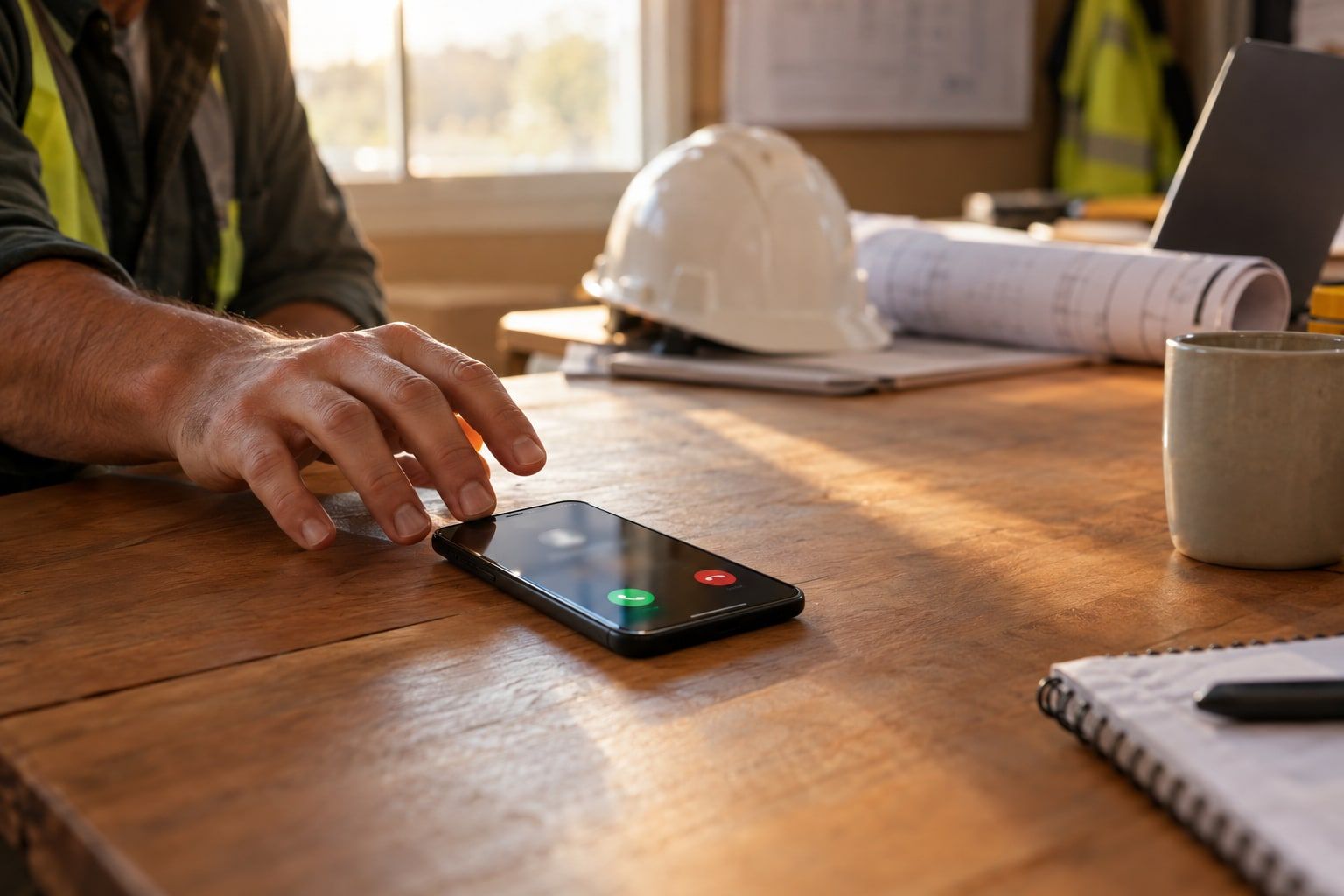
If you run a crew, show houses or close deals on the phone, you already know the problem: the phone rings when you can’t answer it. You’re on a roof, in a showing, on another call or asleep. Some callers leave a voicemail. Many just call the next business on the list.
An AI receptionist answers those calls for you. This guide covers how the technology works, what it does well and badly, how to write its script, the disclosure and recording rules to think about, and how to tell whether it’s paying off.
How an AI receptionist works
An AI receptionist is a voice agent connected to your phone number. When a call comes in, a few things happen in quick succession:
- It listens. Speech recognition turns the caller’s words into text in real time.
- It thinks. A language model reads that text along with your instructions (your script, services, hours and rules) and decides what to say next.
- It speaks. A synthetic voice reads the response back, usually within a second or two.
- It uses tools. Mid-call, it can check your calendar for open slots, book an appointment or look up whether the caller is an existing customer.
- It writes it all down. When the call ends, the transcript, recording, summary and answers to your qualification questions go into the CRM.
Step five is what separates a useful AI receptionist from a fancy answering machine. A call that doesn’t land in your CRM with the right details is a call you’ll have to make again.
What it handles well, and what it doesn’t
| Handles well | Better left to a person |
|---|---|
| New inquiries (“Do you do gutter cleaning in Plano?”) | Upset customers and complaints |
| Collecting name, number, address and need | Pricing negotiations and discounts |
| Asking a fixed set of qualification questions | Complex scope questions that need site knowledge |
| Checking availability and booking appointments | Emergencies that need a judgment call |
| After-hours and overflow calls | Callers who ask for a human |
| Answering FAQs (hours, service area, process) | Anything involving legal, medical or financial advice |
The pattern: AI is good at structured, repeatable conversations. It’s weaker when the call needs empathy, authority or knowledge it wasn’t given.
Writing the script
Treat the script like onboarding a new receptionist. Be specific about what to say, what to ask and when to stop.
The greeting. Name the business, say who’s speaking and that it’s an AI, and mention recording if you record:
“Thanks for calling Avery Home Services. I’m Avery’s AI assistant, and this call may be recorded. How can I help today?”
The knowledge. Give it your services, service area, hours, what you don’t do and how your process works (“We do a free on-site estimate, then send a written quote”). Leave out prices unless they are fixed and current.
The boundaries. Tell it what it must never do: promise prices, guarantee dates, give legal or safety advice, or argue with the caller.
The ending. Confirm what happens next: “You’re booked for Thursday at 2 p.m. You’ll get a text confirmation, and Marcus will call you if anything changes.”
Qualification questions by industry
Keep it to five or six questions. Every extra question is another chance for the caller to hang up.
| Industry | Questions to ask |
|---|---|
| Contractors and home services | What do you need done? What’s the property address? Is it urgent or planned? When would you like it done? Do you own the home? |
| Lawn care | What’s the address? Roughly how big is the yard? One-time or recurring service? Any extras like leaves or aeration? |
| Realtors | Are you looking to buy, sell or both? Which areas? What’s your timeline? Are you working with another agent? Are you pre-approved? |
| Agencies | What service are you interested in? What’s the business and website? What’s the main goal? Rough monthly budget? When do you want to start? |
| High-ticket closers | What made you reach out today? What have you tried so far? What’s your timeline to decide? Who else is involved in the decision? |
For a deeper look at qualification frameworks, see how to qualify leads.
Disclosure and recording consent
This section is general information, not legal advice. Rules differ by state and change over time, so check with a lawyer for your situation.
Tell callers they’re talking to an AI. It’s the honest thing to do, and it avoids the moment where a caller feels tricked. Regulators are moving in the same direction. In August 2024 the FCC proposed rules that would require callers using AI-generated voices to disclose that at the start of each call, and to disclose that consent may include AI-generated calls when collecting it (FCC NPRM 24-84). That was a proposal, not a final rule, but it shows where expectations are heading.
Outbound AI calls carry real legal risk. In February 2024 the FCC declared that calls made with AI-generated voices are “artificial” under the Telephone Consumer Protection Act (FCC). That means the TCPA’s consent requirements for artificial or prerecorded voice calls apply when an AI voice calls someone. Answering an inbound call is a different situation, but if your AI receptionist also places callbacks or follow-up calls, make sure you have the right consent on file first.
Recording consent varies by state. Federal law generally permits recording a call when one party to it has given prior consent (18 U.S.C. § 2511(2)(d)). Some states are stricter and require everyone on the call to agree, and calls that cross state lines can bring in more than one state’s rules. The practical approach most businesses take is to announce recording at the start of every call, so callers who continue have been told.
Store what you told the caller. Keep the recording or transcript showing the disclosure, and keep consent records for any number you call back. If you’re ever asked, you’ll want evidence, not memory.
Handing off to a person
An AI receptionist should know when to stop. Write clear handoff rules:
- The caller asks for a person. Don’t argue. Take a message, promise a callback and make sure it happens.
- The call is urgent. A burst pipe or a buyer with an offer deadline should alert the owner right away.
- The caller is upset. Acknowledge it, collect details and route it to a person.
- The AI is out of its depth. If it can’t answer after one attempt, it should say so and arrange a callback rather than guessing.
The handoff only works if someone is waiting at the other end. Every completed call should create a follow-up task for the lead’s owner, with the summary attached, so the person calling back already knows the address, the need and the timeline. Pair that with your speed-to-lead process so callbacks happen within the hour, not the next day.
Measuring results
Answering calls isn’t the goal. Booking qualified work is. Track these monthly:
| Metric | How to measure it | Why it matters |
|---|---|---|
| Calls answered by AI | Count of AI-handled calls | Shows how much coverage you gained |
| Appointments booked | Bookings made during AI calls | The most direct sign of value |
| Qualified lead rate | Qualified calls ÷ AI-handled calls | Tells you if the questions filter well |
| Callback time | Time from call end to first human contact | Handoffs only work if people follow up |
| Hang-up rate | Calls ended early ÷ AI-handled calls | High rates point to a script problem |
| Won revenue from AI calls | Revenue from deals whose source was an AI call | The number that justifies the cost |
Listen to a handful of recordings every week, especially short calls and ones that didn’t book. You’ll find the confusing question or missing answer faster than any dashboard will show it.
How Exa helps
Exa’s AI receptionist uses Vapi-powered voice agents to answer inbound calls, qualify leads, check availability and book appointments. Transcripts, recordings and summaries are saved to the lead’s timeline, and calls appear in the unified inbox alongside email, SMS and WhatsApp. Appointments respect your availability slots and double-booking protection, and sync with Google Calendar.
You can also place outbound AI calls from a lead or contact, or as a step in an automation. Exa stores consent per channel, including calls, with its source and evidence, so you can check it before you call. See the security page for how consent and audit logs are handled.
Final thoughts
An AI receptionist is most valuable for the calls you were never going to answer: after hours, on the job and during the rush. Give it a tight script, be upfront with callers that they’re talking to an AI and that calls may be recorded, and make sure every call ends with a clear handoff to a person. Then judge it by the appointments it books, not the calls it picks up.
Try it with your own leads
Exa puts leads, pipeline, inbox and an AI assistant in one simple app.
Sources
FAQ
Frequently asked questions
Short answers to the questions we hear most about this topic.
Still have questions?
Start a free trial and see Exa with your own leads and pipeline, or email our team.
What is an AI receptionist?
An AI receptionist is software that answers phone calls with a natural-sounding AI voice. It can greet callers, answer common questions, ask qualification questions, check your calendar and book appointments, then pass the details to your CRM.
Will callers know they're talking to an AI?
They should. Tell callers at the start of the call that they're speaking with an AI assistant. It's the honest approach, it sets expectations and some rules are moving toward requiring it.
Can an AI receptionist replace my front desk?
For many small businesses it covers the calls nobody could answer: after hours, during jobs and when lines are busy. Complex, emotional or high-stakes calls are still better handled by a person.
Is it legal to record calls handled by an AI receptionist?
Federal law generally allows recording when one party to the call consents, but some states require everyone on the call to agree. The simple approach is to announce that the call may be recorded at the start. This is general information, not legal advice.
What questions should an AI receptionist ask?
Ask what the caller needs, where the job or property is, their timeline, a rough budget if relevant, and the best way and time to reach them. Keep it to five or six questions so the call stays short.
Can an AI receptionist make outbound calls?
Many voice agents can, but outbound AI calls carry more legal risk. The FCC has said AI-generated voices count as artificial voices under the TCPA, so you generally need the right prior consent before placing them.
Recommended reading

AI voice agents for small business: a buyer's guide
Inbound vs outbound AI voice agents, where they help small businesses, what to test before you buy, the FCC rules on AI voices and the costs to plan for.
6 min readRead
AI call summaries: never take call notes again
What a useful AI call summary includes, a copy-and-paste template, how recording consent works in the US and how to check summaries for accuracy.
7 min readRead
Appointment scheduling for sales teams
How to set up booking flows, availability slots, calendar sync and reminders so sales appointments get booked fast, never overlap and actually happen.
7 min readRead
Speed to lead: why the first five minutes matter
A practical playbook for responding to new leads while they are still paying attention — without hiring a night shift.
3 min readRead